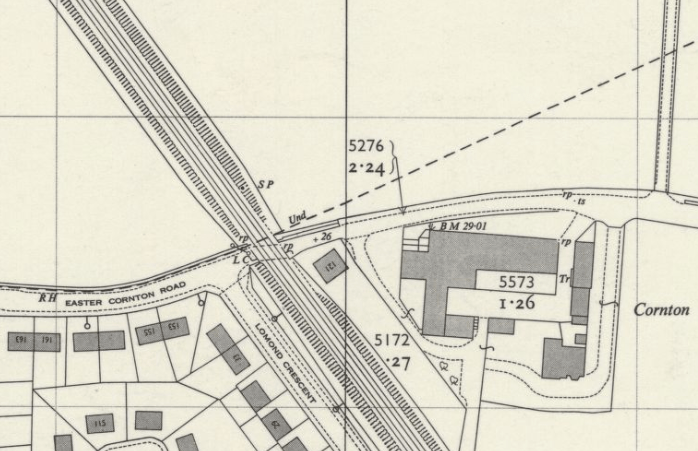
Since the coming of the railway in 1848 there has always been a railway crossing of sorts at Easter Cornton Road and at the northern end of the railway in Cornton. When the railway passed through in 1848 not only did it cut Cornton in half it divided many individual parts of Cornton at the same time.
Prior to 1848 Easter Cornton Road provided an alternative access road from Causewayhead to Bridge of Allan through the farmlands. When the railway was established this did not change and necessitated level crossings in order that traffic could continue to travel that way. It first crosses the railway line at Cornton Farm, East to West, and then crosses back towards Bridge of Allan further north, West to East, at the present automatic level (road) crossing. The Crossing was converted to an automatic crossing in 1966.
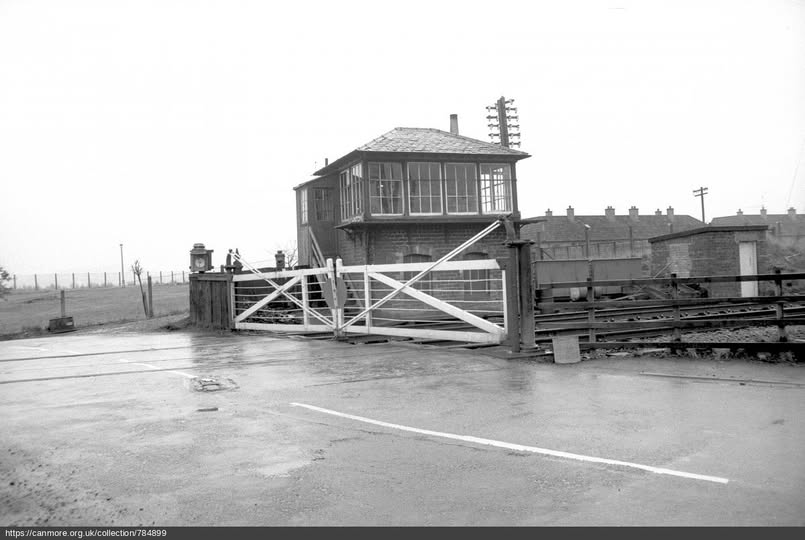
The following is a copy of the script accompanying this photograph in the Canmore Website. It says that it “…shows the signal box and level crossing from the West…” The Cornton Signal box was on the western side of the track so this cannot be “from the West”. We are to presume that someone made a typo! The signal box obscures the building behind it, the two story villa built with the Pig Industry Development Station, but shows the roofs of the two blocks of semi detached bungalows beyond it.
“Scope and content: Signal box and level crossing, Cornton Road, Bridge of Allan, Stirling. This shows the signal box and level crossing from the West. The box is of a standard Caledonian Railway Central Division type, and the level crossing gates are similarly of a standard type. The gates are operated by turning a handwheel in the box, which also controls railway signals protecting the crossing. Resignalling of this route in the 1980s led to the elimination of this box, and the replacement of the crossing gates in this view by remotely-operated barriers. This was in 1971 a very typical installation. This signal box controlled a level crossing taking the B823 road over the former Scottish Central Railway from Gartsherrie to Perth, which opened in 1848, and was part of the trunk line from Carlisle to Aberdeen, completed in 1850. Source: RCAHMS contribution to SCRAN.”
We are told that the train fireman used to throw coal off the train without stopping and the signalman would gather it up for his fire in the box.
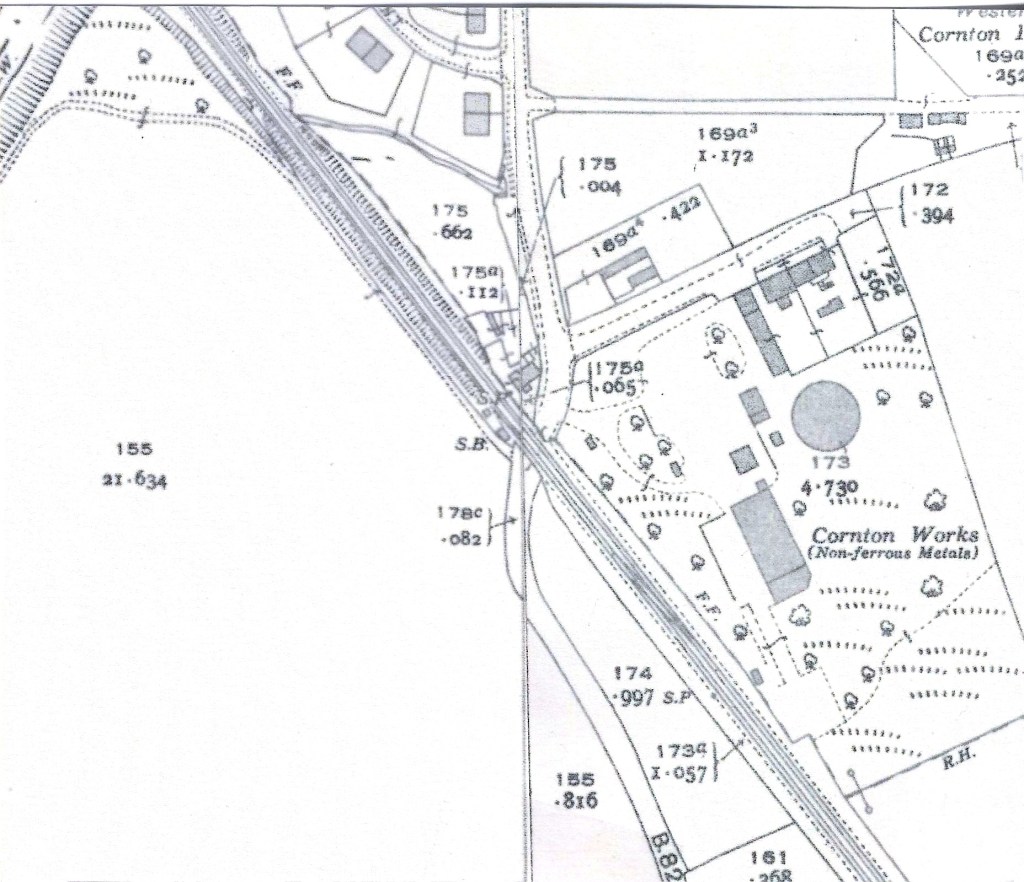
This was before the advent of electricity and required that an attendant be on hand to operate and police the crossings. The Ordnance Survey maps of the time show a small building immediately adjacent to the crossings. At the northern crossing it is shown on the Eastern side of the railway and north of the road.
In the 1895-96 Valuation Roll William Callum, Gatekeeper, and William Anderson Signalman are both registered as occupant of “House, Cornton Crossing, Bridge of Allan.” The Proprietor is listed as Caledonian Railway Coy. Whether there were two houses or these gentlemen shared this accommodation is unclear.
On the early 50s O.S. map at Easter Cornton Road Crossing, there is a building shown as number 121, to the west of the Farm steading and East of the railway line on the south side of the road.
Sheena Dorrington recalls: –
In 1956 a Mrs Young, whose husband was a railway employee and who stayed in the house, had to come out when a car came along and open both gates when she was sure it was safe to allow the cars to go to Causewayhead.
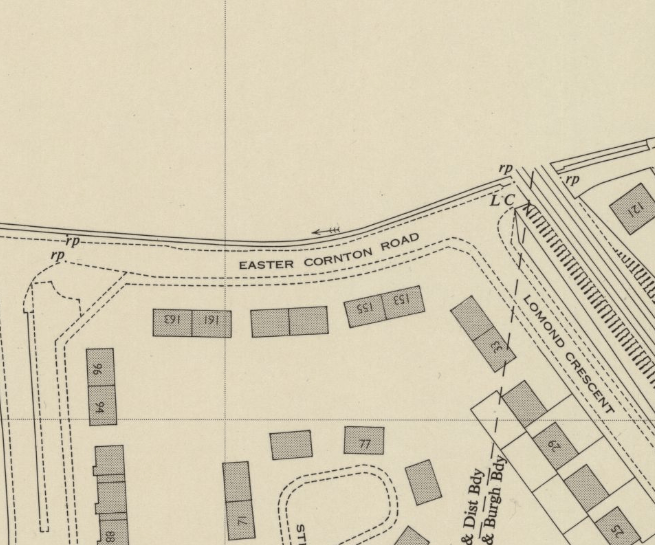
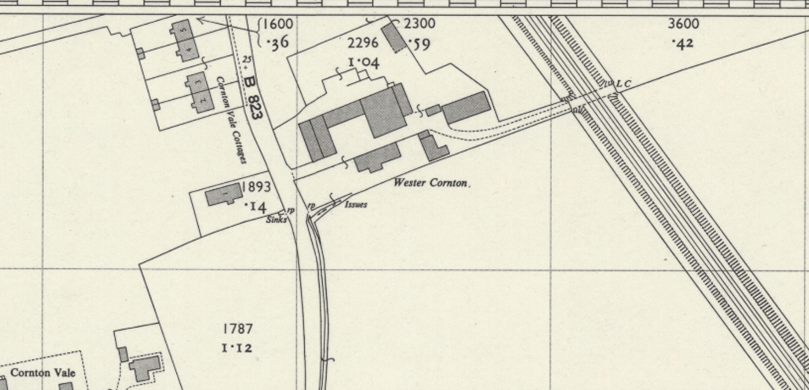
The railway also cut through agricultural lands and often, as was the case with Bridgehaugh Farm, alienated farmlands from their administrative steading. Ordnance Survey maps of 1960 show another level crossing, unmanned, to the east of, what we know today as, Wester Cornton Farm. This was presumably to allow the farmer access to his fields on the other side of the railway. Being unmanned, however, it would require a great amount of care to negotiate safely.
That same 1960 Ordnance Survey Plan shows the level crossing at Easter Cornton Road and, in more detail, the attendant associated dwelling. It is labelled as 121 Easter Cornton Road. At some point in time the level crossing was reduced to the pedestrian crossing that is there today. It is electronically operated and so does not require the services of the Crossing Attendant.